
But I won’t let them break me down to dust / I know that there’s a place for us / for we are glorious.
Keala Settle, “The Greatest Showman” (an awesome movie, do yourself a favor and watch it)
Imagine that you’re me. You’re scrolling through Instagram on your lunch break. You follow the tag #bodypositivity, so a post rolls across your screen.
It’s a teaser for an Evie article that says “The Strange Juxtaposition of Glorified Obesity and Influencer Culture.”
Now, since you’re me, this strikes a chord. You’re into getting up on a soapbox and talking about the body positivity movement, and this article title sounds like it’s going to give you a hot take.
You’re intrigued. You go to the site, find the article and you read it.
And then you read it again.
Okay, now I’m me again and you’re you. I can only carry on an extended metaphor for so long. Sue me.
I read the article a couple of times, and I’m not sure how organized I can present my thoughts herein, but I’ll give it a go.
The Evie article splits the issue into two parts: “glorifying obesity” and “influencer culture.”
So let’s talk about “glorifying obesity” first.
As someone who fits the “thin ideal” physically and who has the privilege that comes along with that, I don’t have personal experience with having this body type. Yes, I have struggled with my own weight, and my height is something that, body positive-wise, I work with every day, but I have never been accused of “glorifying obesity,” so my experience is limited in that regard.
But, to me, the use of this phrase misses the point of the entire freaking movement.
Here’s a hot take for you: everyone, no matter their body type, deserves to be happy. They deserve to love themselves. They deserve to feel beautiful. They deserve to feel good about themselves, and as they do so, they do NOT deserve to have the “glorifying obesity” label slapped across them.
The article reads, “Every human person possesses an innate dignity and worth,” which is supposed to be a baseline “self love” comment. Basically, it’s a box check to get the BoPo folks like me off their back. Like, “yeah, blah blah, you’re a person (even if you ARE bigger), so I guess you deserve to love yourself.”
This is a blog post, so you can’t see my face as I write this, but it is very frowny about that line.
It goes on to say, “Not all body types are physically healthy. Obesity is associated with the leading causes of death worldwide, such as heart disease and stroke. It also negatively impacts one’s mental health.”
This line right here? I got ISSUES with this. Capital “I” Issues.
Let’s unpack it bit by bit.
Not all body types are physically healthy.
Um, okay? And? Your point is?
This is where my Grandpap, ever-wise old man that he is, would say, “YOU mind YOUR own business.”
How about we worry about our own bodies? There’s this mindset these days where people think that someone with a bigger body is unaware that they’re big, and that they need to be medically analyzed everywhere they go.
(Side bar about self-awareness. I’m going to say this out, too: people who are overweight KNOW that they are overweight. Same thing with tall people. Going up to a tall person and saying, “You’re tall!” is like nails on a chalkboard every time, because they probably own a mirror. They know they’re tall. You’d be surprised about how self-aware many “outsized” people are. So, put a pin in the medical concern crapola, because no one wants to hear it. Okay, mini-rant over.)
Anyone read my last blog post, where I pointed out all the issues with strangers commenting on your body? This faux-concern for others’ physical health is just bullshit. I’m sorry, but it just is. (Remember a couple lines ago when I said “mini-rant over”? Yeah, I lied.) Worry about your OWN health and your OWN body, and stop worrying about another person’s physical health. Let them worry about that. And if they’re not worried about it? Cool! Since it’s THEIR body, that’s their choice!
Am I making sense? Fabulous. Let’s move on.
“Obesity is associated with the leading causes of death worldwide, such as heart disease and stroke.”
Maybe this statement about obesity is true. I’d have loved a link to a medical source here just for my own perusal, but maybe I’m just picky. Even if it is true, my point remains. Are you a medical expert? Is someone coming to you, a medical expert, as a patient? No? Then zip it up, asshole.
If it’s not YOUR body, why are you so worried about the health implications of it? It just smacks of thinly veiled fatphobia, and it’s hard enough to just exist in this world without people telling you your body is “wrong.” It’s hard enough to simply exist without others telling you HOW and WHEN you can love your body.
It’s hard enough to simply exist without others telling you HOW and WHEN you can love your body.
Next part: “It also negatively impacts one’s mental health.”
From where I’m standing, the biggest thing that impacts one’s mental health is propaganda that indirectly implies that if you are fat, you can’t love and celebrate your body.
That your body is inferior to a thin body.
That if you are overweight, you live an unhealthy lifestyle.
It implies all kinds of things that just pile up and, yeah, that would impact one’s mental health.
Let’s switch gears now to the second part of the article, which talked about influencer culture.
The article says that influencer culture promotes unnatural bodies.
I find it interesting that the author of this article chose to write about influencer culture and how it promotes unnatural bodies, but let’s cycle back for a moment.
Are big bodies not natural? I’m all about knocking influencer culture and the collective penchant for over-editing photos, selling artifice as reality, blah blah, but when it comes to natural bodies, if they’re big, we can’t celebrate them?
That math doesn’t add up, and I got a 97 in AP Calc in high school.

How can you write an article about how influencer culture sells an illusion, riddled with edited photos, implants, unhealthy dieting practices and plastic surgery, but in the same breath be saying that people who are celebrating their natural bodies are “glorifying” something unhealthy?
Am I the only one who sees a problem with this?! Is this not some sort of contradiction?
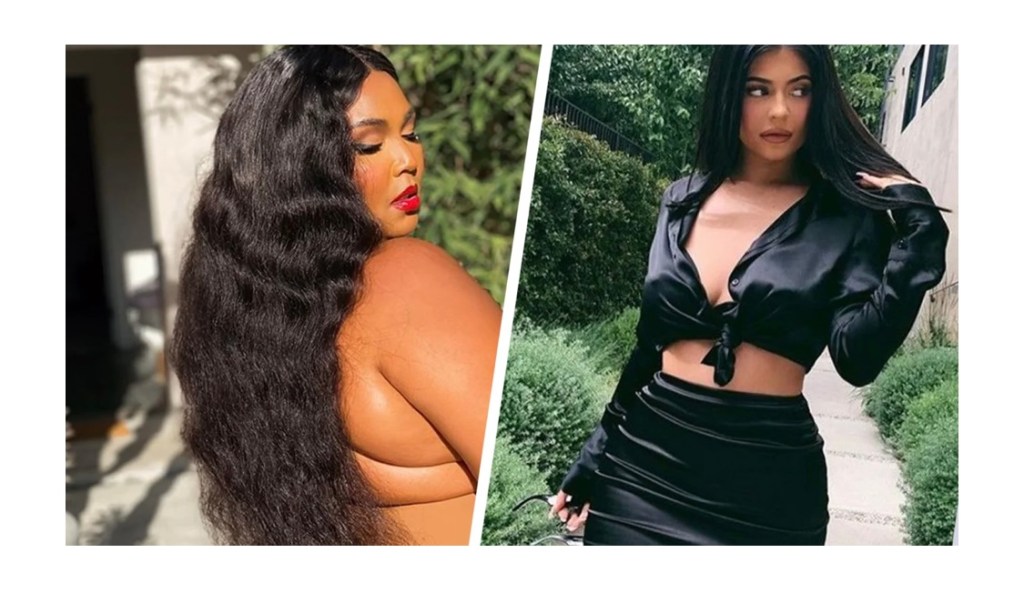
The author cites Lizzo and Lena Dunham as two celebrities who are working to promote “body normativity.”
Isn’t this a good thing? The second part of the article talks about how the fakeness of influencer culture is harmful, so logically, people like Dunham and Lizzo who are showcasing their real, unedited bodies, should be celebrated, right?
Nope. Apparently not. Can’t do that, because then you’re glorifying obesity.
Sigh.
I do appreciate open dialogue about stuff like this. This is how I learn. This is how I understand how folks different than me think when it comes to stuff like this. Excusing my above diatribe, I do actually enjoy reading articles like this one because it forces me to see the topic at hand from a different perspective.
Here are my takeaway thoughts that I had while reading this, just to sum it up, in case you got lost in the fuzziness of the above rant:
- Unless you are a medical professional giving actual, necessary advice to a patient, shut up with the concern for another person’s health. Worry about your own health.
- Everyone deserves to love their bodies. Period. And not just because “all human beings have inherent worth” or whatever line we’re supposed to be fed. I mean that everyone deserves to have an active, positive, loving relationship with their own bodies. Not because of “inherent worth” but because in this life, you get one body. We can do better than “inherent worth.” Everyone deserves to love themselves loudly and apologetically, no matter what anyone else says.
- AND, in that strain, loving the skin you’re in isn’t “glorifying” anything. If folks want to take it that way, that’s on THEM, not on the person who is just trying to love their body. This might be a hot take too, but I don’t think that someone with a big body person posting a photo on Instagram where they feel beautiful is at ALL “glorifying obesity.” If someone looks at that photo and draws that conclusion, that’s their business, but all I see is someone who is just feelin’ themselves. Is that a crime? To be feelin’ yourself?
- For me, the body positive movement is about knowing yourself and loving yourself. That’s LITERALLY in my Instagram bio: “Know thyself, love thyself.” And that’s it. It’s a personal thing, and if I choose to share my thoughts with others, then that’s my choice, but people who just EXIST are not begging for your thoughts or opinions, though it seems there’s no shortage of people who will give it to them.
So that’s my literary analysis of an article I came across on Instagram. I’ve never actually heard of “Evie,” but I’m definitely going to be clicking around to check out some of their other articles. Here’s the link to the article I saw on Instagram: https://www.eviemagazine.com/post/the-strange-juxtaposition-of-glorified-obesity-and-influencer-culture/
Your Well-Read-and-Critically-Thinking Servant,
Em
 It's Raining Em