
And I’ve been waiting for this time to come around…but, baby, running after you is like chasing the clouds…
One Direction, “Story of My Life”
Once upon a time, a spunky young college graduate named Emma June spent a weekend visiting her cousin in New York.
The whole trip was like a movie: two young gals, being spunky around the Big Apple. They were living their best lives.
Because Emma June was a huge Lady Gaga fan, she and her cousin, Grace, decided to have dinner at Joanne Trattoria, the restaurant owned by Lady Gaga’s parents.

When they walked in the door, who did they see at the bar, but Mr. and Mrs. Gaga themselves.
Yup. That’s right. The parents of the LEGENDARY Stefani Germanotta.
And, because Emma June was so spunky, cute and generally unforgettable, she was sure that they’d remember her.
They glanced at her when she walked in the door, so obviously they’d remember her. She was so memorable, one of a kind and she was clearly the main character. They had to remember her, right?
Right?
…Yeah, about that. Reality is a bitch, Emma June. This painfully true story is illustrative of something I’ve been meaning to write about for a while, but I just haven’t gotten enough experience under my belt to tackle it.
But I’m ready now. Let’s talk about Main Character Syndrome.
Stop…What The Hell Are You Talking About?
I refer to this concept a lot when speaking with my gal pals. I never knew it had a name until I did some googling, and I found out that while it isn’t a medical term, technically, it is a “syndrome” that is common enough that different websites have published articles about it.
“Main character syndrome–also known as the protagonist syndrome–is when a person views him/herself as the main character in a work of fiction. Everything this person does all fits into a narrative.”
That definition is from Medium.com’s Mind Café. There’s more information where that comes from, so I’ll include the link to their article down below.
The key in this definition, as far as my description goes, is the word “narrative.”
So many times I’ll talk to people, mostly my girlfriends, who describe their lives as if they’re the main character in a movie or book.
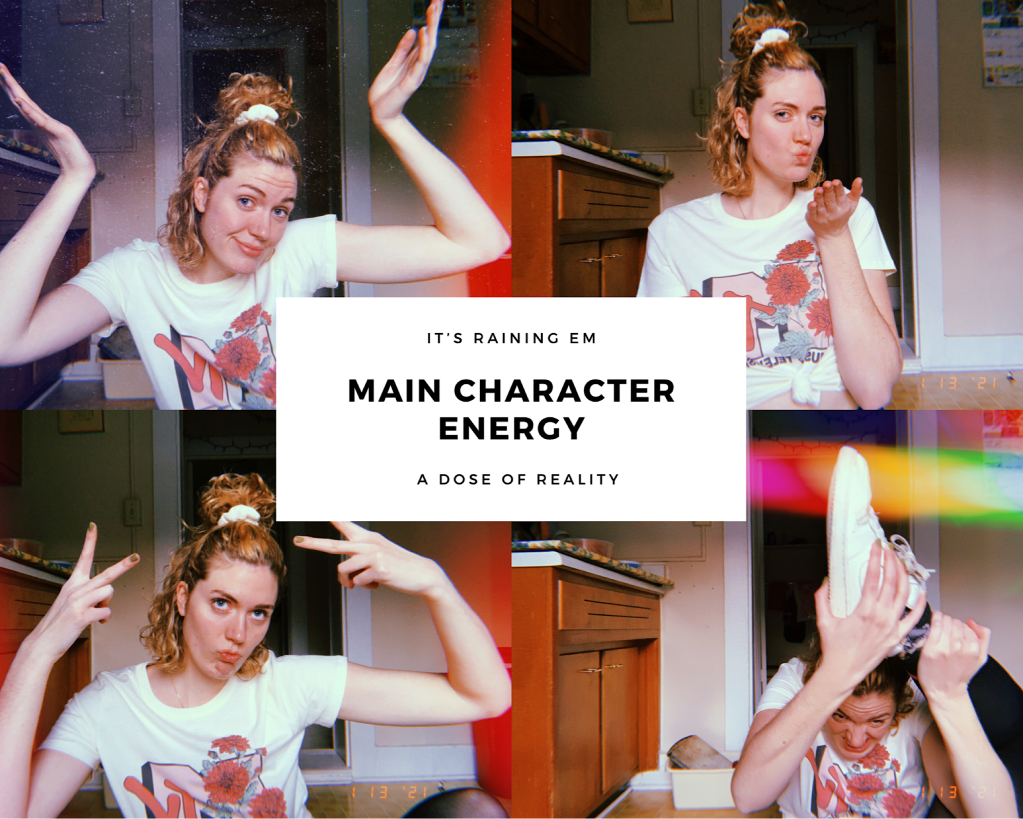
There’s even an Internet thing going around right now that describes people as having “main character energy,” and it basically means that these people are unique and interesting and, most of the time, total characters.
To me, personally, I perceive a few different phrases as a DING DING, THIS PERSON IS LIVING A NARRATIVE, NOT THEIR LIFE moment.
For example, the term, “Dream job.”
Or the terms “soul mate” or “dream husband.”
The emphasis on the “dream” element should clue you in: it’s not reality. Dreams aren’t reality.
And, oh by the way, social media doesn’t help this.
Think about Instagram: a sea of carefully edited and curated photos posted by users that give OTHER users a glimpse into their lives. Only, let’s be real: how often is the REAL reality portrayed in social media? It isn’t.
Since this is, as they say, my party, let’s use me as an example. Most of my photos on Instagram are photos I take of myself when I’ve done my makeup or hair and I’m feeling fabulous. Nothing wrong with that, it’s just if you go on my page and see this particular collection of photos, you might be inclined to believe that I exist all day every day as a well-coiffed goddess with glowy skin and an impeccable sense of style.
Maybe because that would be the narrative I put out. It’s not my reality.
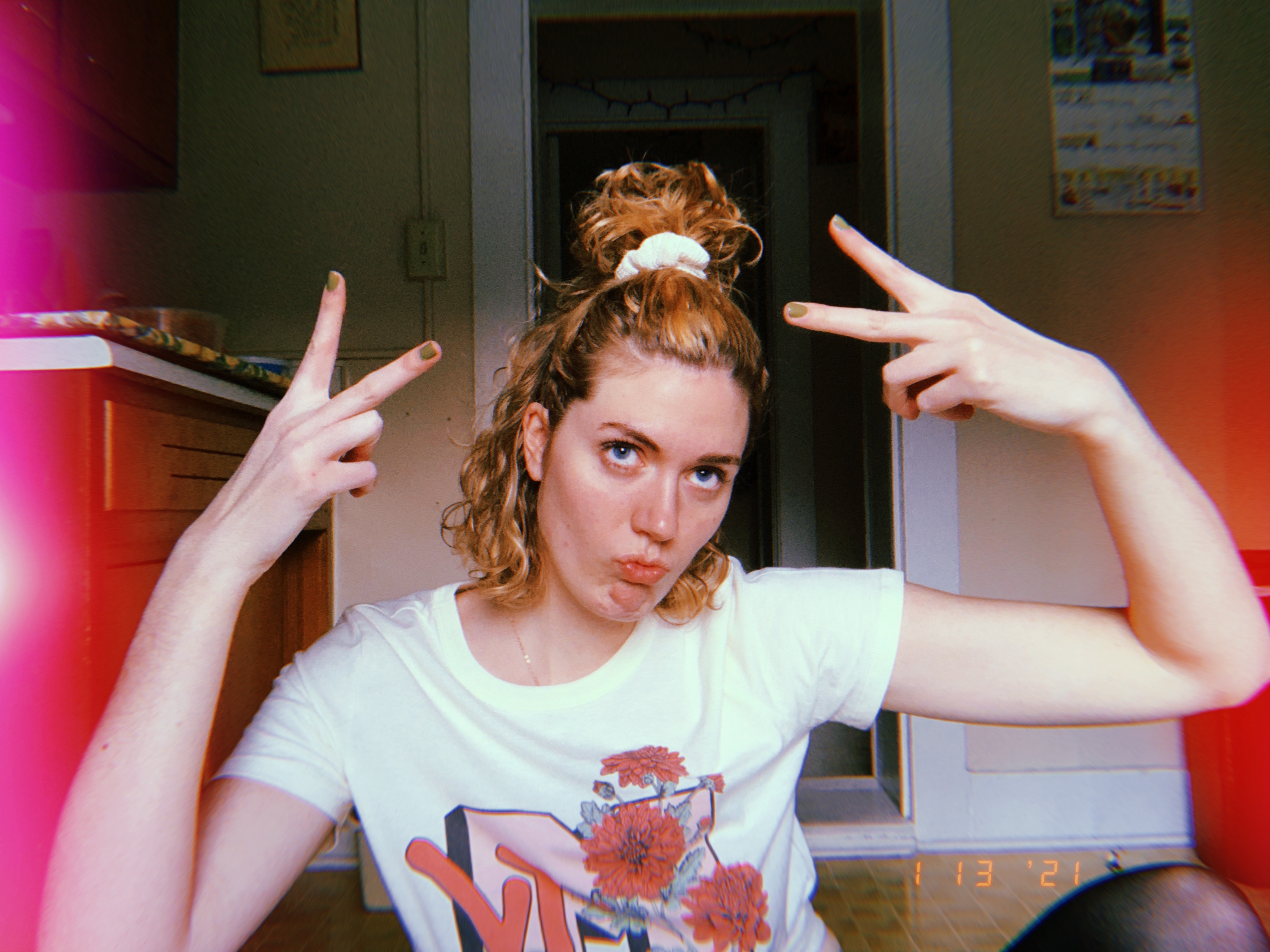
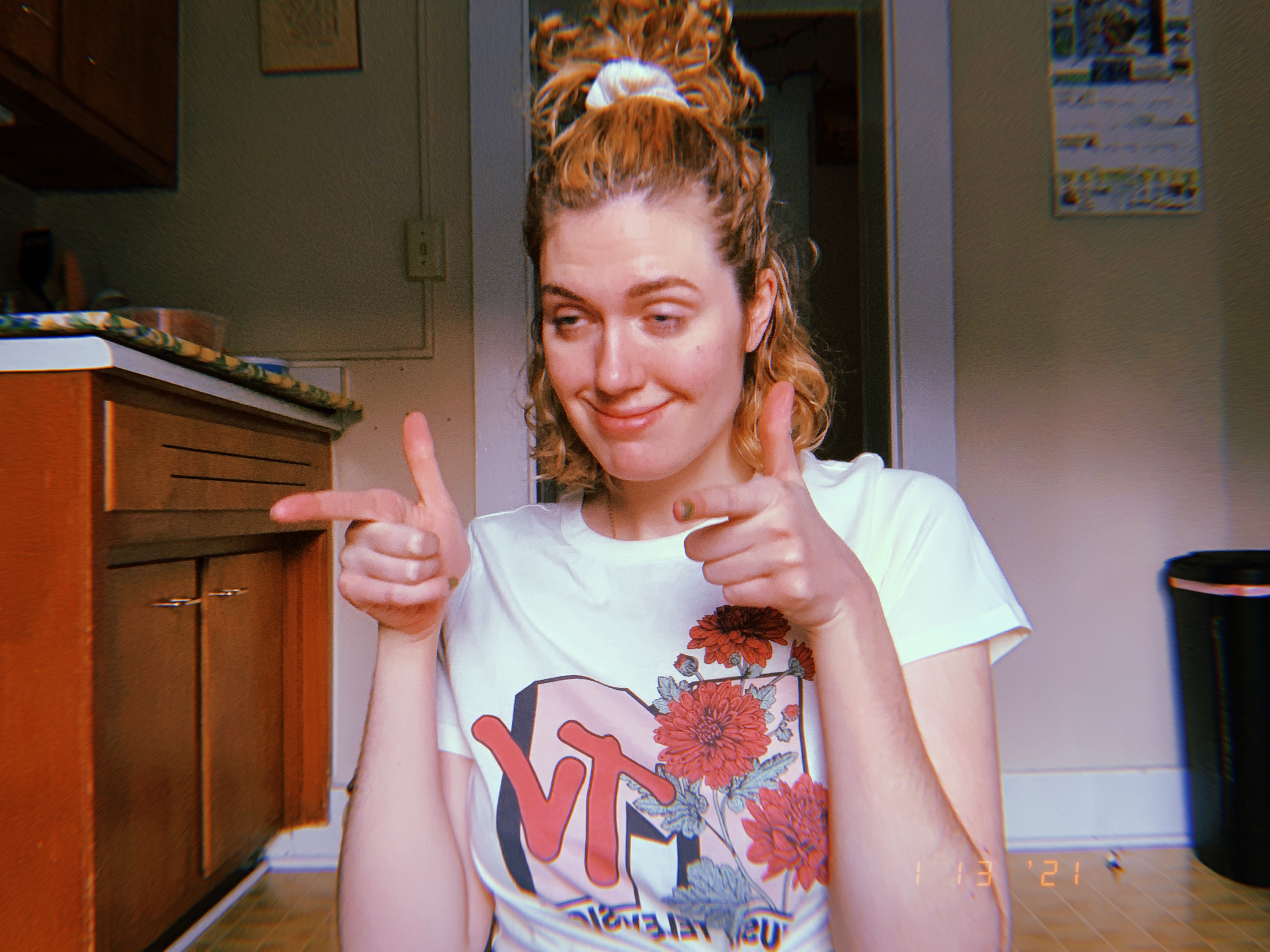
(Side bar: I am actually trying to change that. It’s tough to change that narrative, but I have to start somewhere. It’s a work in progress, being my most authentic self on social media, but that’s a blog post for another time.)
This is how most people’s social media presence is. They post when they feel good, not when they feel bad, and they post when they’re doing something exciting. The result in all of this is an entire platform of users who are projecting an overly glossy, unrealistic narrative of themselves. It’s hard to keep that in mind sometimes.
Painting your life as a narrative and writing yourself in as the main character is not uncommon, nor is it always a bad thing. Though, if you ask me (and you didn’t, but since you’re still reading, you’re obviously intrigued), it does a lot more harm than good. So let’s talk about why and how it can be harmful and why constantly seeing yourself as the “main character” isn’t always the flex you think it is.
It Hurts Us, Precious
Isn’t it a good thing that we see ourselves at the main character?! What, Emma, you’d rather us be secondary characters in our own lives?!
Yeah…no. That’s not the point. This type of narrative thinking has a lot, A LOT of negatives that go along with it. It might feel nice at the time, but there are deeper implications that you might not be thinking about.
Or, maybe you are, in which case I would say, “Wow, you’re so smart and intuitive. Start a blog.”
Like I said, viewing your life as a narrative (or, if you will, a “story”) where events are already laid out in front of you? Not the move. It gives you a warped sense of reality, and actually prohibits you from seeing stuff playing out the way it actually is in The Real World, because you’re seeing everything through the Main Character Fairyland World lens.
I write about this a lot, but self-awareness is very important to me. It’s an attractive quality that I seek out in other people, because I grew up being aware of how the things I say and do affect the world around me.
How am I coming across? Is what I’m saying being understood? How is my attitude being perceived?
These are all questions that run through my mind like a ticker tape (and I’m young, so I don’t really know what that is, but I googled it and I’m 99 percent sure I’m using that phrase properly), on repeat, 24/7.
And placing yourself into a narrative can really mess with that, because it can bend the way you view yourself and your actions. Self-Awareness and Main Character Syndrome are not really friends.
Let’s take a second to think about it in terms of romantic relationships.
Being the expert that I am, having had a total of 0 actual boyfriends in my life, my thoughts on this matter are basically gospel. You’re probably thinking, “Emma, how can you speak with authority on this if you’ve never experienced it?”
And to that I would say, “It’s truly a gift. I have been blessed with incredible wisdom. I don’t know what to tell you.”
If you are someone who constantly goes through your life following some sort of narrative, entering into a romantic relationship might be dicey, because you’re kind of stuck on your own story.
You’re stuck on how YOU can get to where YOU want to be, how YOU can get YOUR needs filled, et cetera, et cetera.
The thing about a good relationship, though, is that it can’t actually be all about you all the time.
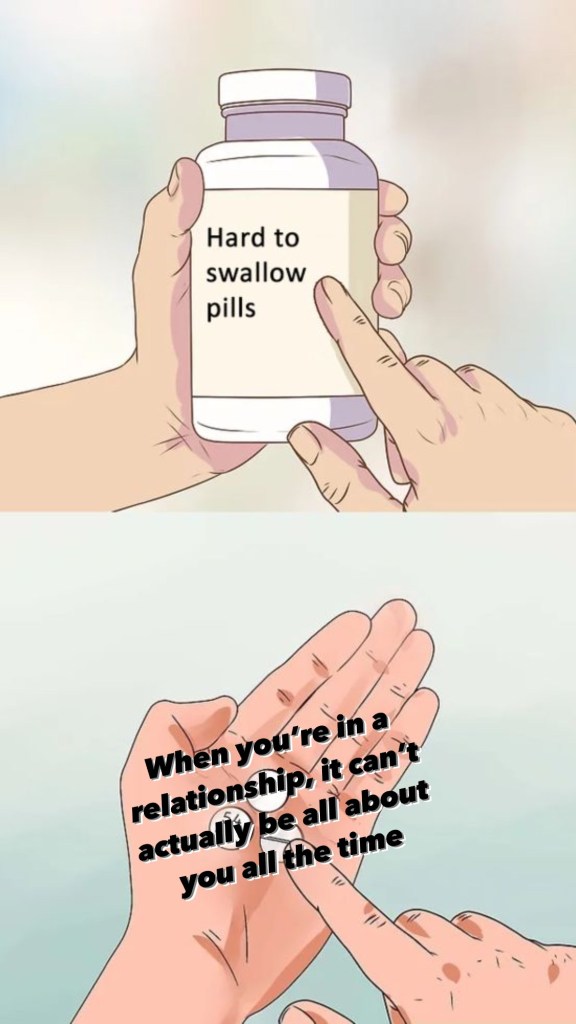
It takes two people to be in a romantic relationship (unless, of course, you’re into polyamory, in which case I REALLY cannot speak on that. I’m an expert on many things I’ve never experienced, but I know when I’m licked. Figuratively speaking). That’s two people with pasts, two people with their own baggage and trauma, two different personalities, two sets of needs and wants and goals and all that jazz.
You can’t be stuck in your own narrative and try to fit this individual into a rigid role that you’ve set out for them. It won’t work. That’s not how human beans work. It needs to be flexible and fluid and adaptable, and you have to understand and live in the reality of that relationship. Because how else are you going to accurately determine how it’s working? IF it’s working?
It could end up as a square-peg-round-hole situation. Take me for example.
I recently was seeing someone, and our brief dalliance started in a way that I perceived as so perfect. He was checking all of my boxes. Over the few weeks we were seeing each other, there’d be things he said that my initial reaction was, “huh?” or “I don’t LOVE that, but we can overlook it,” but I chose to gloss over them. It was going well. I really liked him.
Maybe, just maybe, we were heading toward Boyfriendville.
*Narrator’s voice* “They were NOT heading toward Boyfriendville.”
Eventually, abruptly, our little thang ended, and we went on our way. And then, THAT’S when the self-awareness hit.
I had been engaging in a narrative, not reality. If I had been focused on reality, I would have taken into consideration the stuff he said and did that made me scratch my head or that pissed me off or that made me question myself and my own worth, instead of focusing so much on keeping him around, in the Romantic Love Interest role in the narrative.
He was the square peg, and I was the…round…hole…
Okay, let’s not use that metaphor anymore. It grosses me out.
It was very clear to me that my dwelling in my own story was keeping me from seeing the reality of the situation, which was that he wasn’t giving me what I needed.
And, what was more, what I initially thought I needed wasn’t ACTUALLY what I needed.
Me? Being wrong about something?! Unprecedented!
That’s the thing about the Syndrome and romantic relationships: you spend so much time holding onto the romanticized fantasy of a person that you overlook stuff that might be questionable, problematic and, sometimes, downright toxic.
It’s a slippery slope, and it’s better to look at reality honestly, baldly and with all of its flaws, instead of retreating into your own fantasy.
Can It Be A Positive? Like, At All?
Here’s the good news: if you have dabbled into Fantasyland (a.k.a Romanticizing Everythingtown, which is right next door to Protagonistville), you’re not alone. We’ve all done it, even if, after reading this, you don’t want to admit it.
(I will take a moment and say that because social media really feeds this, younger folks might be more afflicted with the narrative mindset than older folks, but I stand by what I said. Everyone has done this at some point.)
And I don’t think it’s ALL bad. I think there are some positives to this!
I think it’s good to have goals. I don’t want you guys to be reading this and think “Oh, Emma doesn’t want me to have a PLAN for my life? I need to just wing it all the time? Okay, sure. Fine. Whatever you say.”
I think having a plan is a good thing. Having goals is a good thing. But I’m going to sound like a broken record when I say this, but self-awareness and a healthy dose of reality is also a good thing.
I’m not saying that if you classify yourself as “a dreamer” or “a romantic” then you have to go sit in the corner, but I’m just saying that a bit of realism never hurt anyone. In fact, it grounds you. I think everyone could use being grounded from time to time.
I also think, from a confidence perspective, that viewing yourself as the “main character” is a positive! You SHOULD be the main character in your own life. I’d be concerned if you weren’t. I think that viewing yourself like that (not in excess) can help you to be more decisive, less passive in your life and generally help you with your self-confidence. Tipping over the edge into narcissism, pride and fantasy is where it becomes problematic.
I’m just trying to give you all a little something to think about. We all love books and/or movies, but we live in reality, and we need to treat it that way. Writing yourself and others into a role is going to do more harm than good in the long run, and as an expert at, well, everything (see? Self-awareness is key), it’s my job to help you see that.
If you have any thoughts about narrative thinking, Main Character Syndrome, self-awareness, or, you know, anything else, just drop me a line. I’d love to hear your thoughts and experiences.
Your-Self-Aware-And-Definitely-Not-A-Psychology-Major servant,
Em
P.S. Here is the link to the article I mentioned above. Give it a read! https://medium.com/mind-cafe/why-you-may-need-a-healthy-dose-of-main-character-syndrome-288ec2b34411#:~:text=Main%20Character%20Syndrome%20%E2%80%94%20also%20know,all%20fits%20into%20a%20narrative.%E2%80%9D
 It's Raining Em
One response to “3.13 Main Character Energy: A Dose of Reality”
I love you and this!! excellent post 🙂
LikeLike