

Don’t be insecure / If your heart is pure / You’re still good to me if you’re a bad kid, baby.
Lady Gaga, “Bad Kids”
Really, I just wanted to use a line from a Lady Gaga song.
I’m back in the blogosphere. I took a little break to figure out how I want to balance some of my other creative projects, but I really love this blog and I want to be a little more active because, well, the topics I write about mean a lot to me.
For example, the topic I want to dive into today: food morality.
In many of my blog posts, I revisit the theme of food and my relationship to food, but it’s hard to dive TOO deep into that without touching a little bit on the food morality side of things.
(Basically, that’s just a fancy way to describe how we as a society tend to label food as “good” or “bad.”)
Diet culture, and honestly just our culture as a whole, spends a lot of time categorizing food into “good” and “bad” groups, eat/avoid categories, etc.
If I asked you to name “good” foods, you’d probably name different types of vegetables. Maybe lean meats, legumes, fruits, blah, blah, blah. Food that is healthy for you, right? Right.
And if I asked you to name “bad” foods, it would be your typical junk foods, right? Or, rather, foods that don’t provide too much nutritional value for our bodies?
I get that. I’m with you on that. There’s just one TEENSY little problem.
The moral aspect.
How many times have you heard someone who was on a diet say, “Gosh, I’ve been SO bad today! I had two cookies after lunch!”
Or, conversely, someone who has been “so good this week,” because they’ve only packed salads with lite dressing for their lunch.
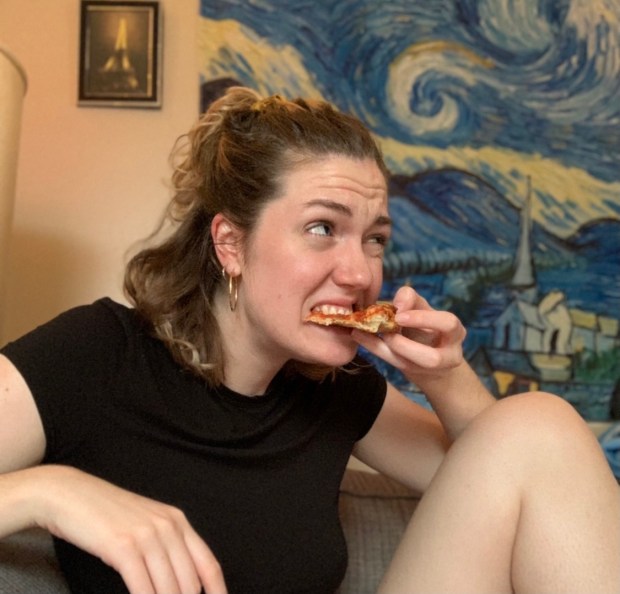
Or maybe someone calls him or herself a “pig” for giving in to their fast food cravings.
Or even the phrase “guilty pleasure,” which implies that there’s something inherently “wrong” about the food we are choosing to put into our bodies.
It’s a fine line when you start listing out “good” foods and “bad” foods, and categorizing them in your head like that. But here’s what I’m actively trying to do: get rid of those labels.
Yup. I’m becoming a “I don’t like labels” person. It’s not just for commitment-phobes anymore.
Let me break it down into the simplest terms: the biggest issue with assigning morality (AKA “goodness” versus “badness”) to food is the guilt and shame that results from it. It’s as easy as that.
Let’s use ice cream as an example. God, I love ice cream. But ice cream falls into the category of “junk food.” Diet culture encourages us to avoid it. It’s one of those foods that, in diet culture, is presented as “bad,” and you’re being very naughty if you eat it.
Apparently.
If you subscribe to this belief, then the moment when you give into your ice cream cravings and indulge (which you probably will, since, hello! It’s ice cream! And you’re human.), then you’re looking for a way to “make up for it” in order to get back out of the hole.
And therein lies the issue: the “making up for it.” Or, let’s call a spade a spade: punishing yourself and your body for eating something “morally bad.”
That mindset can lead to a little cause-and-effect scenario, one that never ends well.
“If I eat some ice cream now, I just won’t eat dinner later.”
Or, something that is so normalized in society today, punishing your body with exercise: “I’ll just run an extra mile on the treadmill to make up for eating this burger.”
Don’t get me wrong, exercise is great. Pushing yourself to run an extra mile is great. But when you categorize it in your brain as a punishment for eating food that makes you happy or that you’ve been craving, that’s when the relationship between you, food and exercise can become more of a slippery slope.
Now, let’s talk about me for a minute. This is, as they say, my show.
Sometimes, when I go to the grocery store, I shut off my brain to certain food items because I’ve been encouraged by society (and ye ole diet culture) to see them as “bad.”
I think to myself, “Oh, I can’t eat that,” and then go about my business, only picking out foods that I “can” eat.
“Good” foods.
And the result?
Well, when I’m around foods that I’ve been primed to see as bad (for example, sweets or chips), I lose control.
I don’t eat them in moderation, and I end up feeling worse about it and even more ashamed for indulging in the “bad” food.
THIS is why my solution is to stop seeing foods with these moral labels. Yes, I am aware of the nutritional value of food. I have a basic knowledge of calories, good fats, bad fats, saturated fats, trans fats, proteins, all that jazz. I took a Health and Human Performance class in college.
(Was I almost 30 minutes late to the hour-and-a-half long class every single time? Yes. Yes I was.)
With this knowledge of my body’s nutritional needs, my plan is to not be scared of the foods I like to eat. In order to not lose control around these foods, I have to shift my attitude around them.
Maybe buy a little bit of ice cream here and there.
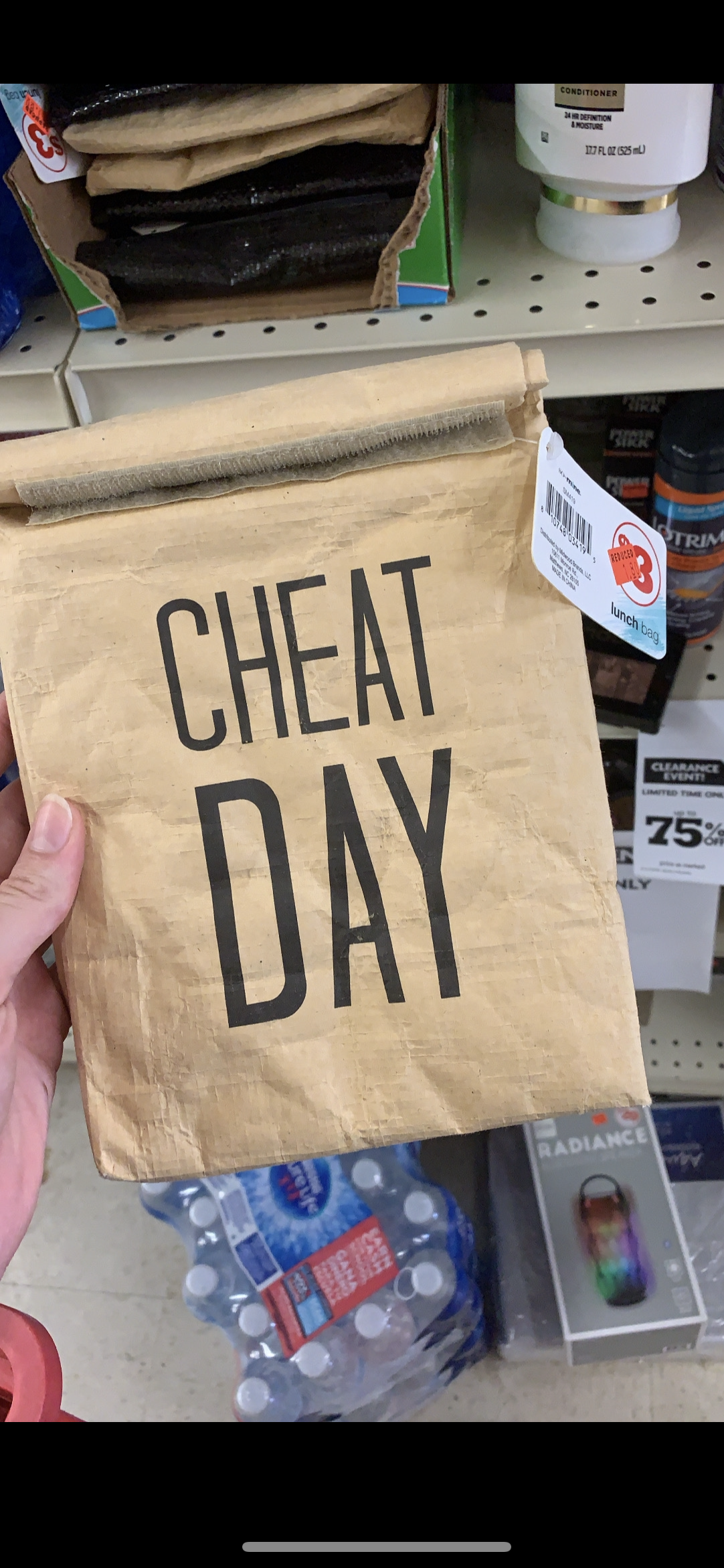
Stick a bag of chips in my lunchbox occasionally to take to work.
It’ll be little by little, but it’s worth a shot, right?
Look: don’t cross certain foods off just because you’ve been trained to see them as evil (unless, of course, you’ve got a food allergy or a medical issue). Food is not inherently good or bad. We have, over the years, placed those labels on foods based on their nutritional value, and the labels have stuck. And so have the negative mental effects that stem from those labels.
My advice to anyone struggling with food morality (and trust me, I’m like, right in the thick of it myself, so we can be in the trenches together) is to try to break down viewing food as moral or immoral and eliminate the cause of the guilt and shame we feel when eating these foods.
It’s no surprise we feel this way either. Look at our society: weight loss is celebrated (no matter the means in which the weight is lost), and weight gain is condemned.
Lessons like this are so ingrained in our brains and recycled by the media that it makes it difficult to see things in a different way. We have been constantly sent the message that thinness and healthy, “clean” food is the ideal and what we should be striving for, and it is celebrated when that is achieved (even if the actual thinness and weight loss was achieved through unhealthy means, like restriction, over-exercise and extreme measures).
So, with that message thrown in our faces constantly, it’s no wonder that we start feeling the guilt and the shame when we “indulge” in something that isn’t considered “clean.”
My point is, whether foods have a certain nutritional value or not, labeling them as “good” or “bad” leads only to continued unhealthy mindsets around food.
Food is food. That’s it. Eating healthy foods does not make you “good,” eating unhealthy foods does not make you “bad.”
Working on your relationship with food is hard enough; bringing morality into it just complicates things and pushes us back a few steps.
There are so many ways that we can move into the ranks of being a “good person,” but labeling food as right or wrong isn’t the way to get there.
 It's Raining Em