
I feel like when it comes to the archetype of “girl who writes,” there’s always a collection of cliches that supposedly illustrate her: coffee addict, messy bun, glasses, kind of quiet or introverted, chewing on the end of her pencil, etc.
You know what I’m talking about. You have the image in your head.
Well, I used to hold that image in my head, too, when I wrote. It felt disheartening, because honestly? That’s not my reality.
I write mostly with pens these days, and chewing on the end of ANY writing utensil is just plain unhygienic. My hair’s not long enough for a messy bun; it’s just messy. I love coffee, and I need it to function, but I’m far from the coffee-crazed writer cliche that always seems to pop up in movies and popular TV.
That cliche doesn’t reflect my reality, and for a long time, I thought that meant I wasn’t doing it right.
Over the past two years, I’ve been doing something that I thought FOR SURE would never happen for me: I’ve been keeping a journal.
God, I used to struggle so hard with journals. It always felt very dorky and “Dear Diary”-like to me, and no matter how hard I’d try, no matter how cute my notebook or how neat my handwriting, it would sit on my bookshelf, untouched, in perpetuity.
But these days I’ve finally found my rhythm with it, busting my self-imposed myth that writers can’t keep journals. And that’s what I want to share with you today, some of the “hows” and “whys” I’ve found with keeping a journal, just in case you’re like me circa three years ago, thinking that journaling isn’t for you.
I’m going to be honest: I’m not entirely sure how I actually developed my current journaling system, but I’ve learned one key thing to remember: you HAVE to find what works for you. It doesn’t matter what kind of “journaling aesthetic” bullshit you see on Pinterest. The method you choose HAS to click for you, otherwise it’ll feel like you’re forcing it and it won’t be sustainable.
For example, some people use bullet journals. Some people prefer unlined sketchbooks for jotting down their thoughts. Some people journal their thoughts in a free-floating document or folder on their desktop.
Me? I’m very, VERY basic.
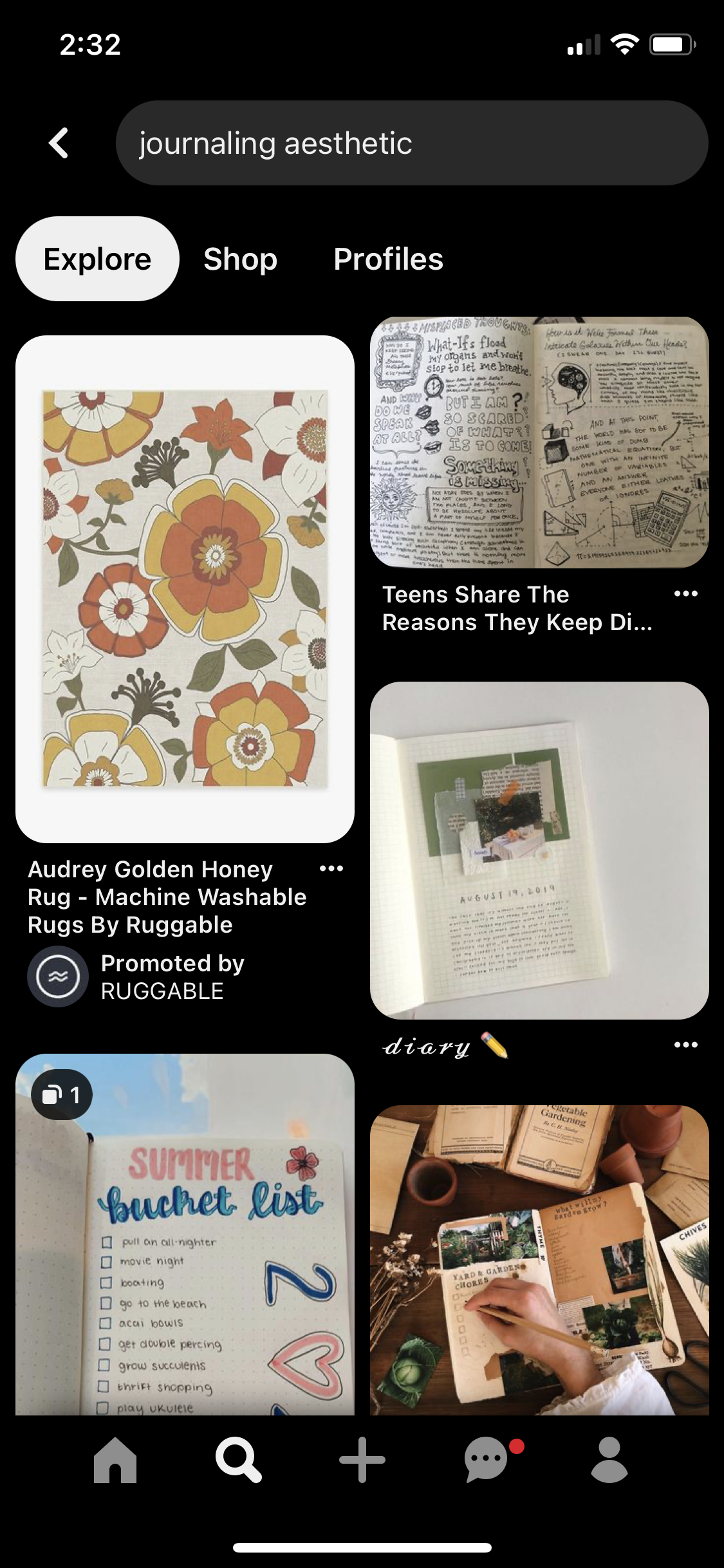
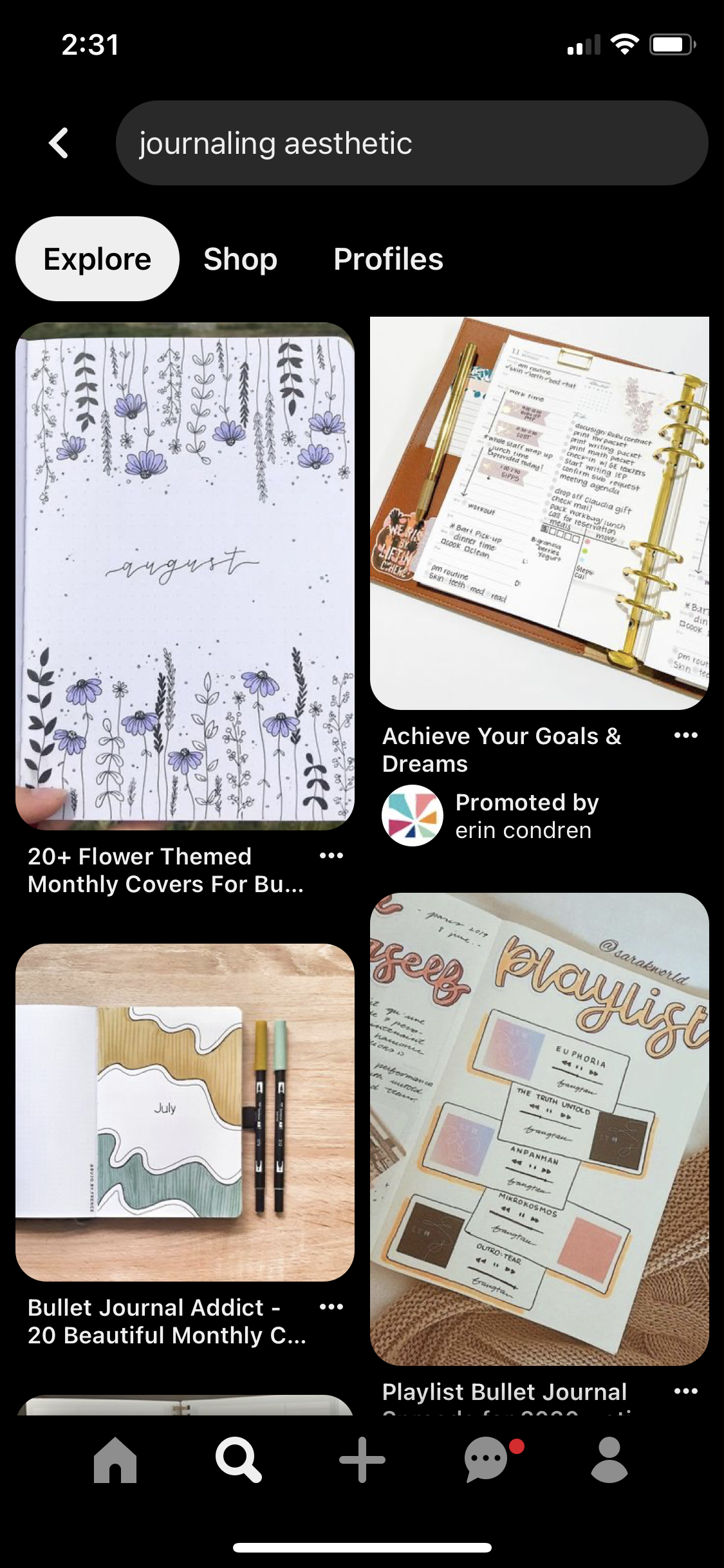
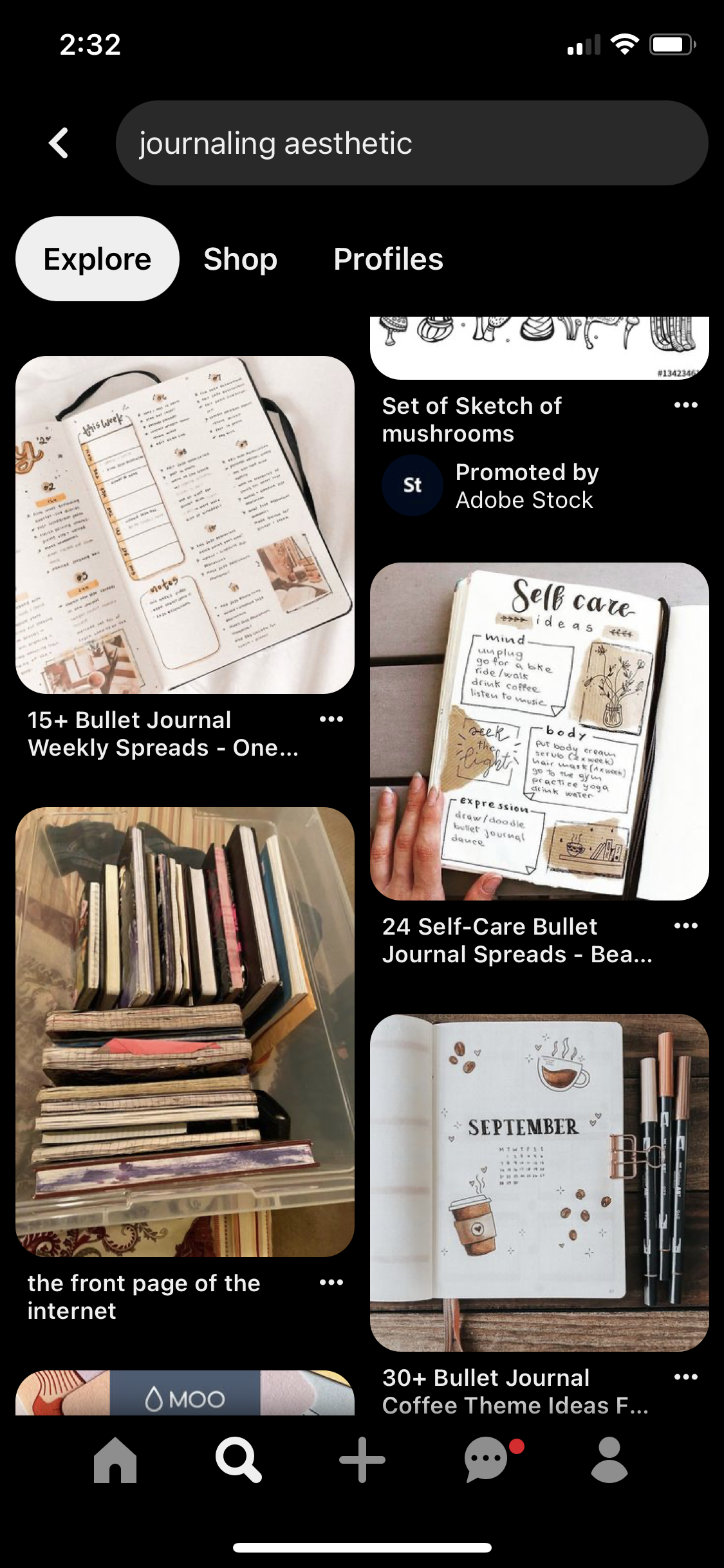
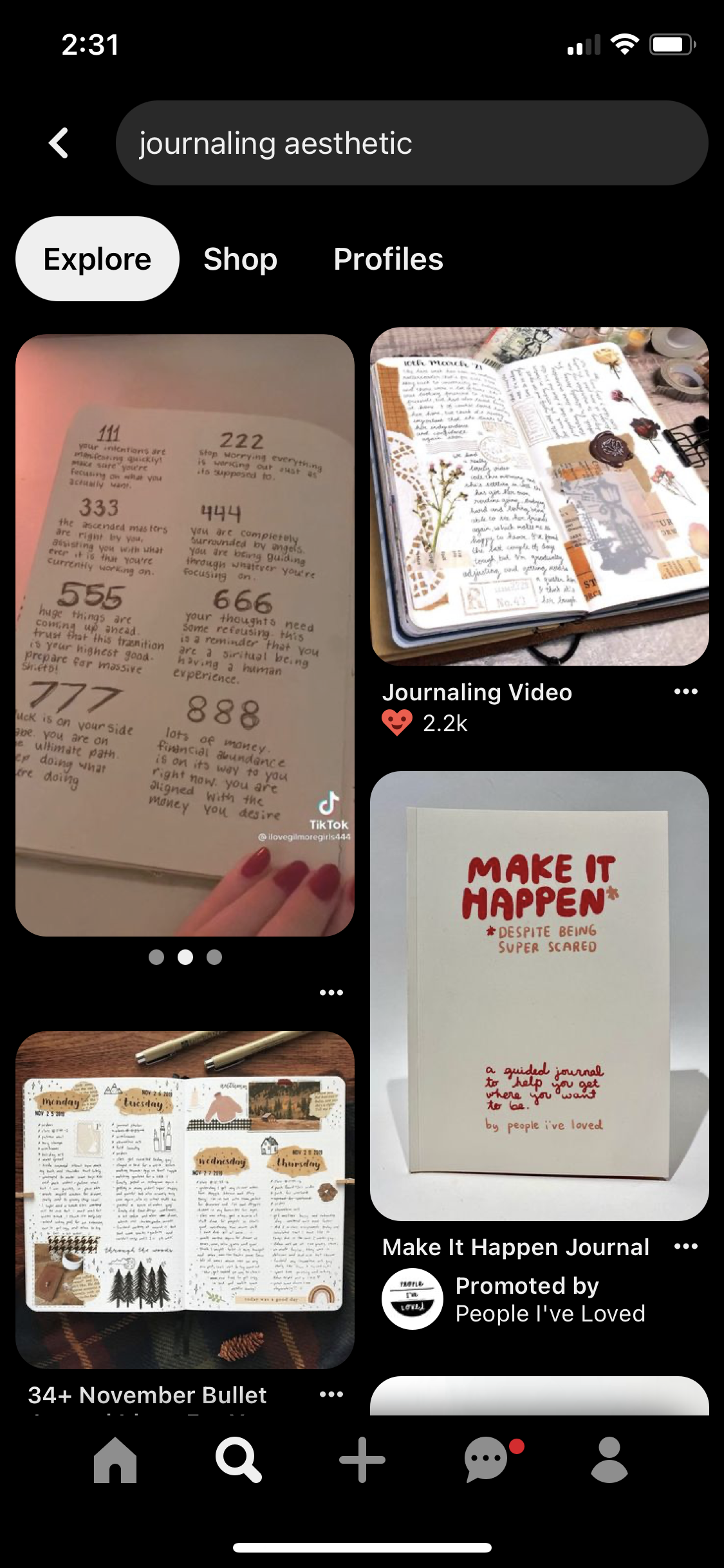
If you search “journaling aesthetic” on Pinterest, it’s always pastels and drawings and cute little sketches. I sometimes get crumbs on my journal and the ink is always smeared. It’s not pretty.
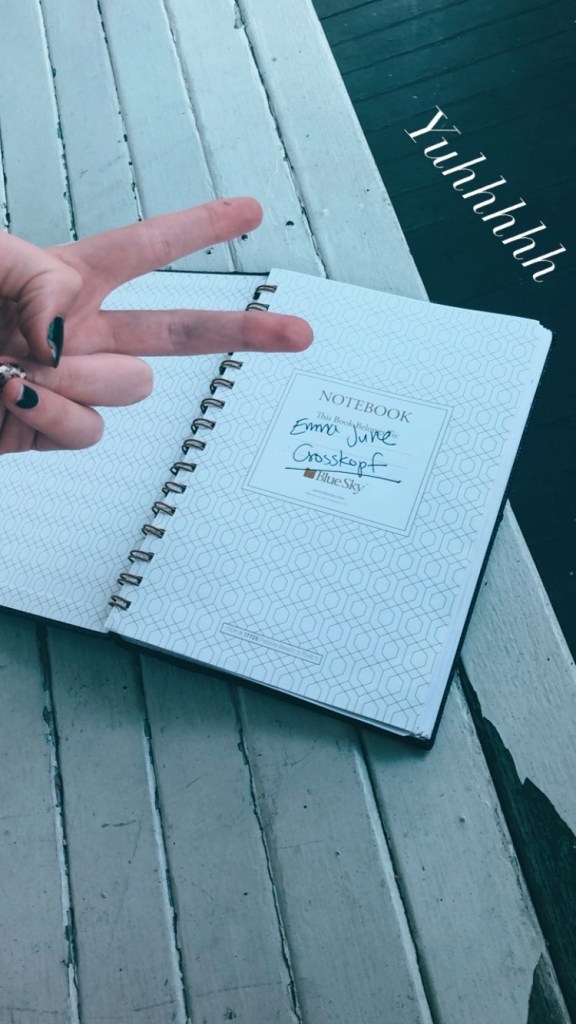
I have one specific kind of notebook I use. I buy it at the local CVS in the office supply section (which, at a pharmacy, is the epitome of the term “slim pickings”).
And I’m EXTREMELY anal. It HAS to be this specific notebook.
It’s not an outstanding, jaw-dropping journal. It’s very boring looking, with a plain black cover embossed with the simple word “Notebook.”
There’s something about its lined, ivory pages and their specific weight, and the hardback of the book and its metal spiral. It’s small but sturdy. It’s simple, sure, but it works.
While I’m on the topic of being anal, there’s also a specific kind of pen I HAVE to use.
Namely, the Pilot Neo-Gel pens. Plain, smooth-writing black ink. That’s it. That’s all I use. I once borrowed (okay, stole) one of these pens from a coworker and thought, “This is it. This is the one.”
I don’t know why this particular pen speaks to me for journaling purposes. But here’s the great thing: I don’t have to actually have a reason.
One thing I’ve learned since I started really committing to this journaling thing is that there aren’t any set rules. That was definitely one of the things that hung me up when I was struggling for YEARS keeping a journal. I felt like there were certain things, as a writer who is trying to journal, that I HAD to do.
Like, I HAD to write in the journal every day.
I HAD to write in first-person.
I HAD to write about what I was thinking at that very moment.
I have realized, however, that all of that “structure” was just some more self-imposed bullshit. When we set these expectations and fall short of them, we become disheartened, and we stop writing and exploring our neuroses.
Maybe after some time passes, we try again, and the pattern continues.
And guess what? It’s still bullshit.
Here’s the deal: if you can only get your journaling muscles moving while you’re sitting on your front porch, then go sit on your front porch. Don’t try to force it anywhere else.
That’s key: don’t try to force anything. Ever. It’ll have you running away from your journal faster than you can say “dear diary.”
I went through a period where every time I felt inspired to write in my journal, it was ALWAYS about my romantic issues. And I thought to myself, “Come on, Emma! You can do better than writing about THIS all the time!”
So I stopped writing about that. I stopped writing altogether for a while.
What happened was that I had shamed myself for my journaling topic of choice, which isn’t fair, because you feel what you feel. You can’t help it.
If you find yourself only writing about one topic or revisiting something that happened a long time ago, again and again, who cares? Clearly your brain needs to hover on that a little more, and I’ve found that journaling about it helps. Who cares if you repeat yourself? Who cares if you revisit events or memories again and again?
Literally, though. Who ACTUALLY cares? Who’s reading your journal that would actually care?
And that particular point leads me to my next lesson.
For a while when I was in college, I thought that everything that spewed from the tip of my pen was solid gold. Seriously. I would take snippets out of my journal and spin them into poems for my creative writing class or my intro to fiction course and I’d bask in their glory.
But now, it’s different.
I may look back at old passages in my journal and be emotionally moved by them, sure. But I don’t do anything with them anymore. Sure, I might dig deeper if I want to expand on something I journaled about for recreational or creative purposes, but I don’t poach lines verbatim from my journal anymore. And I certainly don’t write things in my journal with the goal of using them elsewhere in the future.
Why not?
Well, I’ve come to the realization that for me, at least, the journal needs to be sacred. It can’t be curated. It can’t be overdeveloped. It has to be exactly what I need it to be: an authentic, raw stream of thoughts, scribbled out in hardly-legible words that reflect whatever is going on in my brain. A raw stream.
Kind of like pee in a toilet.
You wouldn’t want to take pee OUT of a toilet, right? And a toilet is objectively the best place for pee to go (unless you’re a drunk college frat boy, in which case a dimly-lit backyard is also a good plan, but that slightly-repulsive image doesn’t work for this metaphor).
So, that’s what I’m doing. I’m emotionally peeing in my journal. And that’s where the pee will stay.
And my final thought on this is that your journal SHOULD be rough around the edges.
Don’t worry about your handwriting. Don’t worry about how it looks. Don’t worry about punctuation or grammar or syntax or flow.
(I know, I know. If you know me, you’re probably aghast that I, a stickler in all ways for grammar and punctuation, am telling you to throw it out the window. But yes. Do.)
The thoughts, the emotions that you write in your journal are YOURS. It doesn’t have to be a Pulitzer-Prize-winning novel. Don’t edit yourself, because it can put you in your head. The goal of a journal, at least for me, is to write down my emotions and offer myself some insight into how my brain works. I can’t do that if I’m OUT of my head while I’m actually writing. It doesn’t have to be pretty. In fact, I would argue that it will help you MORE if you just forget about it being pretty altogether.
And I know the “screw the comma” thought was supposed to be my last one, but I have one last asterisk. I think it’s valuable to mention that everyone who journals does it differently. It’s sort of like praying in that way. I can’t just hop on my blog and tell you how you “should” be journaling, because really, it’s not a one-size-fits-all kind of thing.
Find your size, and try it out. Once you find your rhythm, it’s like you’ve solved a puzzle.
So get out there and try peeing in your journal.
 It's Raining Em